3850 W Greenway Rd, STE 100 Phoenix, AZ 85053


Your child’s first tooth is a milestone, and it’s also the start of a lifelong relationship with oral health. But long before those tiny teeth fully come in, a common and often overlooked threat can quietly take hold – baby bottle tooth decay, more commonly known as ‘bottle rot’.
Bottle rot is one of the most preventable forms of tooth decay in young children, yet parents often let it spread. According to the Centers for Disease Control and Prevention (CDC), tooth decay affects about 20% of children ages 2 to 5. Early childhood caries is the most common chronic childhood disease in the United States.
The goal isn’t to simply treat problems after they appear. The focus is on giving your family the tools and guidance to stop decay before it starts, including protecting your infant’s or toddler’s smile from bottle rot.
What Is Bottle Rot?
Bottle rot refers to early childhood caries (ECC) caused by prolonged exposure to sugary liquids. This includes milk, formula, fruit juice, and even breast milk when a baby is put to sleep with a bottle or allowed to nurse continuously throughout the night.
When sugary liquid pools around a baby’s teeth, bacteria in the mouth feed on those sugars and produce acid. That acid attacks the enamel, causing decay. Because baby teeth have thinner enamel than adult teeth, the damage can progress quickly and spread to multiple teeth.
That’s where family dentistry in Phoenix plays a crucial role. Early dental visits, parent education, and proactive care from a trusted practice like Valley Smiles can make all the difference.
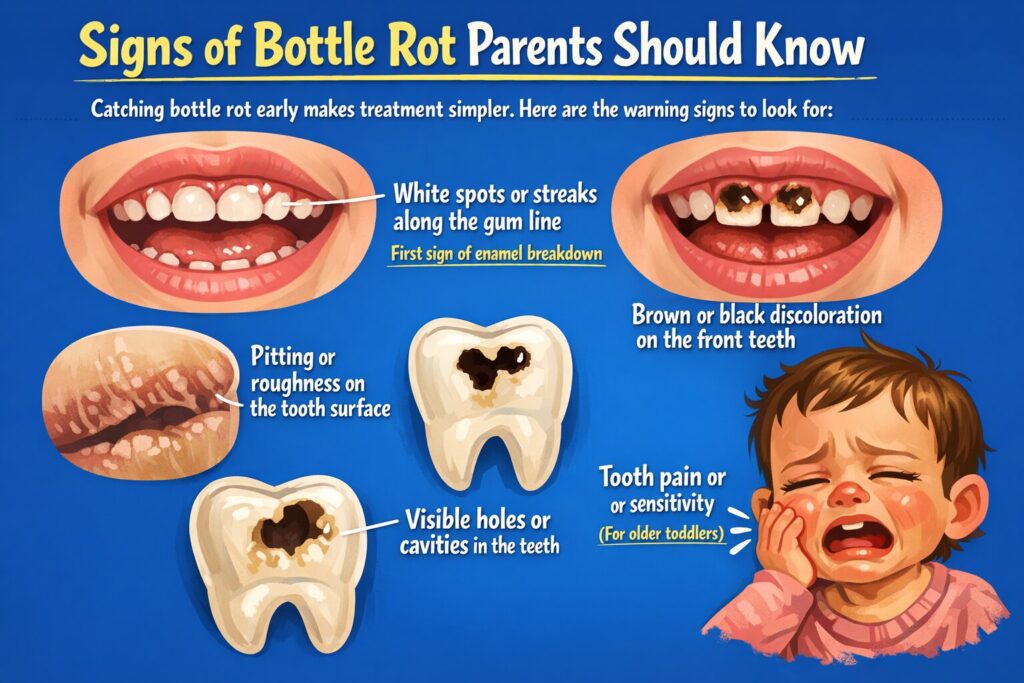
Signs of Bottle Rot Parents Should Know
Catching bottle rot early makes treatment simpler. Here are the warning signs to look for:
- White spots or streaks along the gum line – these are often the first visible sign of enamel breakdown
- Brown or black discoloration on the front teeth
- Pitting or roughness on the tooth surface
- Visible holes or cavities in the teeth
- Complaints of tooth pain or sensitivity (for older toddlers who can communicate)
If you notice any of these signs, it’s worth scheduling a visit sooner rather than later. The longer the decay goes untreated, the more it spreads.
How Valley Smiles Helps Prevent Bottle Rot
Prevention starts with showing up. The American Academy of Pediatric Dentistry (AAPD) recommends that children visit a dentist by their first birthday or within six months of their first tooth erupting – whichever comes first. Valley Smiles welcomes young patients from that very first visit, creating an environment where kids feel safe and parents feel informed.
Infant Oral Health Exams
The first dental exam for your child isn’t just about checking teeth. It’s a full assessment of oral development, jaw alignment, and any early signs of decay. The team at Valley Smiles examines the health of gum tissue, evaluates bite patterns, and checks for the early white spot lesions that often signal the start of bottle rot. Catching these early means treatment can be as simple as fluoride application and behavioral guidance.
Fluoride Treatments and Dental Sealants
Fluoride is one of the most effective tools in preventing tooth decay. Applied topically at dental visits, fluoride helps strengthen tooth enamel and can even reverse early-stage decay before it becomes a cavity. For toddlers showing signs of high decay risk, Valley Smiles may recommend fluoride varnish treatments as part of their regular care plan.
Parent Education and Feeding Guidance
One of the most powerful parts of a pediatric dental visit is the conversation between the dentist and the parent. Valley Smiles takes time to talk through feeding habits, nighttime routines, sippy cup use, and oral hygiene practices at home. This guidance is tailored to your child’s age and specific risk factors, not a generic pamphlet. Phoenix families often deal with particularly warm weather, which can mean more juice and sugary drink consumption — something the team is well aware of and addresses directly.
Source: Medical Centric Podcast
What You Can Do at Home
Between dental visits, your daily habits matter most. Here’s what makes a real difference:
- Never put your baby to bed with a bottle. This is the single most effective prevention strategy. If your baby falls asleep while nursing or feeding, gently wipe their gums or teeth with a damp cloth before laying them down.
- Wipe gums before teeth appear. Use a soft, clean cloth to wipe your infant’s gums after feedings. This removes bacteria and gets them used to oral hygiene from day one.
- Start brushing at the first tooth. Use a soft-bristled toothbrush with a smear of fluoride toothpaste (rice-grain size) as soon as the first tooth appears.
- Transition away from bottles by age one. The AAPD recommends weaning from the bottle around 12 months to reduce prolonged sugar exposure.
- Limit juice and sugary drinks. Water is always the best choice. If you do give juice, limit it to 4 oz per day for children ages 1–3, and never offer it in a bottle.
- Don’t share utensils. Cavity-causing bacteria can be transmitted from a caregiver’s saliva to an infant’s mouth through shared spoons or pacifiers that have been ‘cleaned’ by mouth.
Why Baby Teeth Matter More Than You Think
A common misconception is that baby teeth don’t matter much because they’ll fall out anyway. The reality is more complicated. Primary teeth hold space in the jaw for permanent teeth, support proper speech development, and allow children to chew and eat properly. When baby teeth are lost too early due to decay, it can cause neighboring teeth to shift, leading to crowding and alignment issues down the road.
Beyond the physical impact, early tooth decay can affect a child’s confidence and quality of life. Toothaches interfere with sleep, eating, and concentration. Addressing bottle rot early is an investment that pays off well into your child’s future.
Why Phoenix Families Choose Valley Smiles
Valley Smiles has built a reputation in the Phoenix area as a practice that genuinely prioritizes your family’s long-term oral health. The team understands that bringing a young child to the dentist for the first time can feel overwhelming. That’s why every visit is designed to be calm, welcoming, and focused on education.
Book an appointment at Valley Smiles – Phoenix Dentist today!
People Also Ask
Can bottle rot affect permanent teeth?
Yes, indirectly. Severe decay in baby teeth can cause premature tooth loss, which shifts neighboring teeth and disrupts the space needed for permanent teeth to emerge properly. This can lead to crowding, misalignment, and the need for orthodontic treatment later.
Is breast milk safer than formula when it comes to bottle rot?
Breast milk contains natural sugars and can contribute to tooth decay when babies nurse continuously at night or fall asleep at the breast without having their mouth wiped afterward. It’s not safer by default – consistent oral hygiene habits still apply, regardless of how your baby is fed.
How is bottle rot treated if it’s already developed?
Treatment depends on how advanced the decay is. Early-stage spots may be managed with fluoride varnish. More progressed cavities may require fillings, crowns, or — in severe cases — tooth extraction. Your dentist at Valley Smiles will assess the situation and recommend the most conservative approach possible.
At what age should a child stop using a sippy cup?
Most pediatric dental guidelines suggest transitioning away from sippy cups by age 2 to 3. Prolonged sippy cup use with juice or other sweetened beverages carries similar decay risks to bottle use. Encourage open-cup drinking as early as your child can manage it safely.
Related Articles