3850 W Greenway Rd, STE 100 Phoenix, AZ 85053


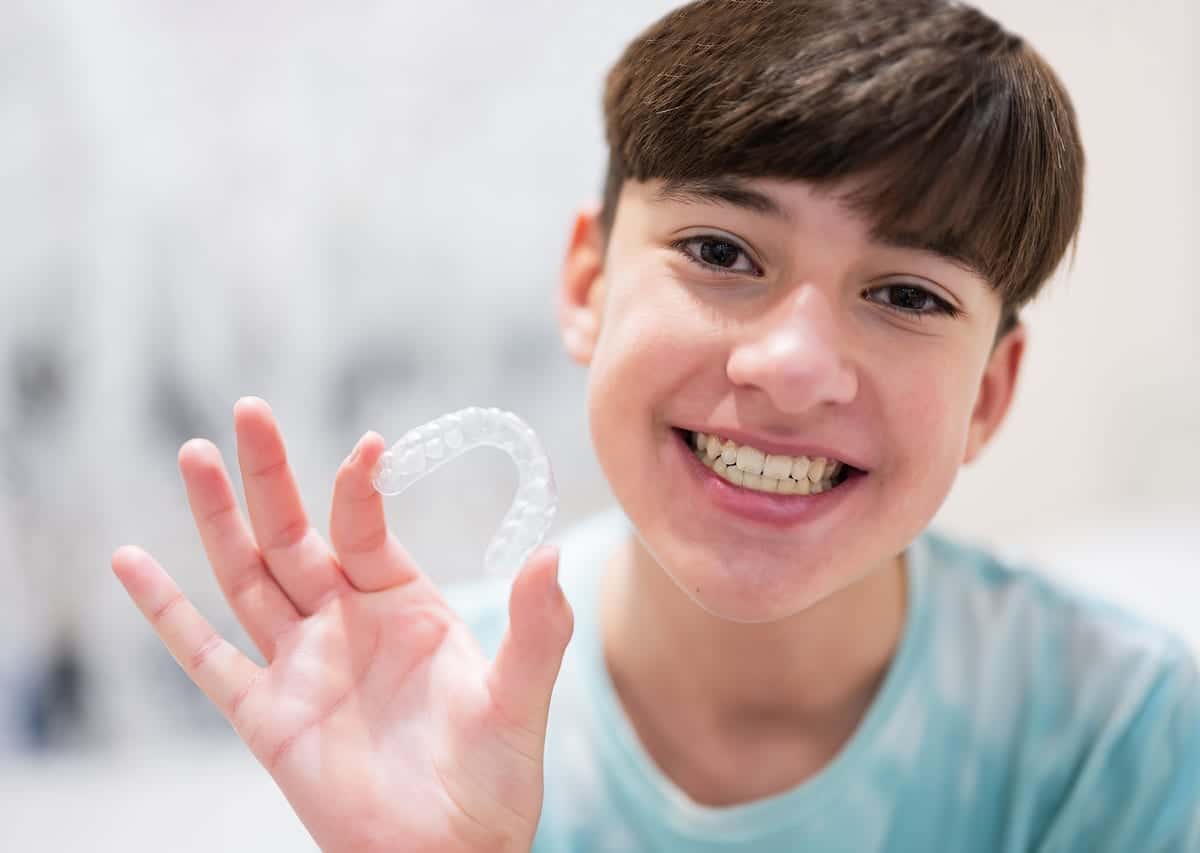
If you’ve started Invisalign treatment in Phoenix, you may be wondering why your Invisalign trays change every two weeks. It can feel like a lot of swapping. But each new tray serves a very specific purpose. Understanding the science behind this schedule helps you stay motivated and get the best results.
At Valley Smiles, Dr. Ryan Towner works with Phoenix patients every day to guide them through the Invisalign process. The two-week change cycle isn’t arbitrary. It’s carefully engineered to move your teeth safely and efficiently. Let’s break down exactly how it works.
How Invisalign Moves Teeth Step by Step in Phoenix
Invisalign works through a principle called controlled force application. Each aligner tray is slightly different from the last. It applies gentle, consistent pressure to specific teeth. Over time, that pressure encourages the bone surrounding your tooth root to remodel.
Here’s the key: your bone needs time to respond. Move teeth too fast, and you risk root damage or tooth loss. Move them too slowly, and treatment drags on unnecessarily. Two weeks is the sweet spot most patients need for safe bone remodeling.
This process repeats with every tray in your series. Each set moves your teeth a fraction of a millimeter. By the end of your treatment plan, those small shifts add up to a dramatically straighter smile.
Why Two Weeks Is the Magic Number for Aligner Changes
The two-week schedule is based on decades of orthodontic research. Your periodontal ligament — the tissue holding each tooth in its socket — responds to pressure over a specific timeframe. Most patients experience meaningful tooth movement within the first few days of wearing a new tray.
By the end of week one, the tray fits more comfortably. That means the initial movement has largely occurred. During week two, the bone around the tooth root begins to stabilize in its new position. Changing trays too early skips this stabilization phase.
Skipping stabilization can lead to relapse or uneven movement. Dr. Ryan Towner always emphasizes wearing each tray the full recommended time. Rushing the schedule may feel tempting, but it can compromise your final result.
The Role of Attachments in Your Invisalign Treatment
Some patients in Phoenix notice small tooth-colored bumps on their teeth during Invisalign treatment. These are called attachments. They look like tiny dots and bond directly to specific teeth. Attachments give your aligner trays a better grip.
Here’s why they matter. Standard aligner trays apply pressure broadly across a tooth surface. Attachments allow precise directional force. This is especially useful for rotating teeth or moving individual teeth vertically.
Not every patient needs attachments. Dr. Towner reviews each case individually and places them only where necessary. They blend in naturally with your tooth color and are removed at the end of treatment.
- Attachments help rotate stubborn teeth that wouldn’t move with tray pressure alone
- They improve tray grip so aligners stay snug during daily wear
- They allow vertical tooth movement, which standard trays struggle to achieve
- They are removed cleanly once your treatment is complete
What Are Refinements and When Do You Need Them?
Even the most carefully planned Invisalign cases sometimes require refinements. Refinements are a new series of aligner trays made after your initial series ends. They fine-tune any teeth that didn’t move exactly as planned. Think of them as a final correction phase.
Teeth are living structures. They don’t always move in perfect mathematical lines. Factors like bone density, tooth shape, and how consistently you wear your trays can all affect outcomes. Refinements allow Dr. Towner to address these variables without starting over.
Getting refinements doesn’t mean your treatment failed. It means your provider is committed to getting your smile exactly right. Many patients complete one refinement round. Some need none at all.
- Refinements are common — they’re built into most comprehensive Invisalign plans
- New digital scans are taken to create your refined aligner series
- Wearing time stays consistent — refinement trays follow the same two-week schedule
- Results are worth it — refinements help achieve precise, lasting alignment
Tips for Getting the Most From Every Tray Change in Phoenix
Understanding why your Invisalign trays change every two weeks Phoenix patients ask about is only half the equation. You also need to wear them correctly. Invisalign trays must be worn 20 to 22 hours per day. Removing them too often slows your progress significantly.
Switch to your new tray at night. Your teeth may feel pressure during the first few hours with a new aligner. Sleeping through that adjustment period makes the transition far more comfortable. By morning, your mouth will have started adapting.
Keep your trays clean and store them properly when not in use. Damaged or warped trays don’t apply pressure correctly. Always bring your current and previous tray to check-up appointments in case you need a backup.
Invisalign is also considered part of Cosmetic Dentistry Phoenix patients often explore alongside teeth whitening and other smile enhancements. Dr. Towner can help you combine treatments for a complete smile transformation. If you ever experience unusual pain or a cracked tray, reach out to Emergency Dentistry Phoenix services to get prompt care without disrupting your Invisalign timeline.
Conclusion: Your Tray Schedule Has a Purpose
Every two-week tray change is a deliberate, science-backed step toward your ideal smile. The schedule accounts for bone remodeling, tooth stabilization, and precise force delivery. Skipping steps or changing trays early can undermine everything you’re working toward.
Dr. Ryan Towner and the Valley Smiles team are here to guide Phoenix patients through every stage of Invisalign treatment. From your first consultation to your last refinement tray, we make sure each step is working exactly as planned. Book Now to schedule your appointment with our team.
Frequently Asked Questions
Why do Invisalign trays need to change every two weeks?
Each aligner tray applies a small, targeted force to shift specific teeth. After about two weeks, the teeth have moved to match that tray’s shape and the surrounding bone has begun to stabilize. Switching to the next tray keeps the movement progressing safely and efficiently.
What happens if I change my Invisalign trays too early?
Changing trays before the two-week mark skips the bone stabilization phase. This can lead to uneven tooth movement, discomfort, or relapse. Always follow the schedule recommended by Dr. Towner to protect your results.
Do all Invisalign patients in Phoenix need attachments?
Not every patient needs attachments. Dr. Ryan Towner assesses each case individually. Attachments are used when specific teeth require more precise or directional movement than a standard aligner tray can provide on its own.
Are refinements covered in my original Invisalign plan?
Refinement policies vary depending on the type of Invisalign plan selected. Many comprehensive Invisalign packages include at least one round of refinements. Dr. Towner will discuss what is included in your specific treatment plan during your consultation.
How many hours per day should I wear my Invisalign trays?
Invisalign trays should be worn 20 to 22 hours per day for best results. They should only be removed for eating, drinking anything other than water, and brushing or flossing. Wearing them less than recommended will slow your treatment progress.